
What can we solve together?
Evaluate & Monitor

The objective AI solution monitoring your health system deserves.

Monitor technical performance, clinical adoption, patient outcomes, and ROI. Know whether your AI investments are working in your environment, for your clinicians and your patients.

The objective AI solution monitoring your health system deserves.

The Monitoring Gap

Vendor Metrics Fall Short

Vendors show you what they want: accuracy metrics from their environment, aggregate statistics, cherry-picked success stories. What they don't show: whether clinicians use the solution as intended, if it improves outcomes, or delivers promised ROI.

Limited Internal Capabilities

Few healthcare organizations have the infrastructure to comprehensively monitor AI. You may track usage or technical metrics, but connecting AI performance to clinical outcomes and value creation isn't something most vendors offer.

No Standardized Approach

Despite frameworks from organizations like the Health AI Partnership, there's no standardized monitoring in the commercial market. This creates a marketplace where health systems lack impact visibility and vendors face minimal accountability.

The Four AI Monitoring Dimensions

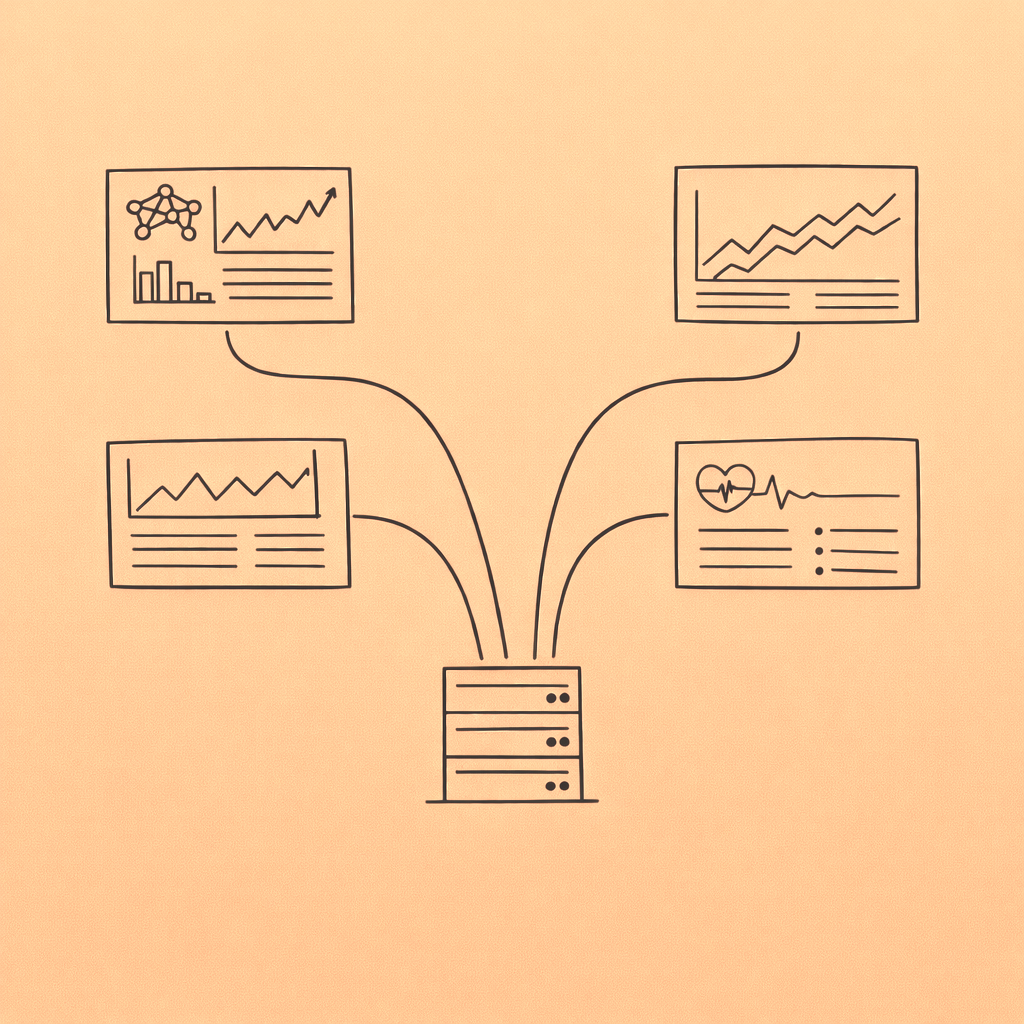
Effective AI monitoring in healthcare requires assessing performance across four interconnected dimensions. Missing any one gives you an incomplete picture. Vega Health goes further than most vendors, measuring what actually matters: outcomes and ROI.

1

Technical Accuracy and Model Fidelity

Real-world AI performance differs substantially from in-silico validation on retrospective datasets. Models built in one clinical environment often perform differently in others due to patient population differences or care delivery variations. In dynamic clinical environments, performance drifts over time as patient populations evolve, clinical practices change, or data quality shifts.

Vega Health monitors AI solutions implemented on the platform continuously, tracking not just aggregate accuracy but performance across patient subpopulations to detect biases that could cause disparate impacts. We monitor data quality of model inputs, because even technically sound models produce inaccurate results when input data is incomplete or implausible.


2

User Adoption and Workflow Integration

Technical accuracy becomes meaningless if front-line workers don’t use AI solutions appropriately or if tools create workflow friction. This dimension tracks how AI integrates into actual clinical practice.

We measure override rates, time-to-action on AI-generated alerts, and engagement patterns that reveal whether tools provide trusted insights or generate alarm fatigue. High override rates might indicate poor predictive value, or they might reveal workflow misalignment and insufficient training. Monitoring must be ongoing because adoption patterns shift as staff changes, workflows evolve, or clinical guidelines update.

3

Clinical and Operational Outcomes

The central question remains: Does the AI solution deliver progress against the use case outcomes you originally identified?

This requires connecting AI implementation to downstream results. Does the sepsis prediction system reduce mortality or time-to-treatment? Does the ED triage tool reduce boarding times? Does the prior authorization solution save staff time and reduce denials?

Success metrics vary by use case and must be defined before implementation. Baseline measurements are established, and data collection continues post-launch. Time horizons vary: chronic disease management may require months to measure outcomes; acute care interventions may show results in days or weeks.

4

Return on Investment and Value Capture

Financial returns matter for most use cases, but value isn’t always purely financial. We track both tangible returns and harder-to-quantify improvements like clinician satisfaction, faster decision-making, and reduced cognitive burden.

ROI monitoring accounts for the full implementation lifecycle. It is critical to track value capture over appropriate time horizons. AI solutions often deliver value differently than anticipated: a tool designed for diagnostic accuracy may provide value through workflow efficiency.

Built on a decade of real-world monitoring.

The monitoring approach underlying Vega Health’s capabilities was developed through years of real-world AI implementation at Duke Health. The Duke Institute for Health Innovation didn’t just build and deploy 60+ AI solutions. They established rigorous processes for monitoring performance, identifying issues, and ensuring sustained value delivery.

This wasn’t theoretical monitoring. It was operational monitoring that kept AI solutions running reliably in clinical environments where lives depended on accurate, timely performance. The methods, frameworks, and technical infrastructure that proved successful at Duke now power Vega Health’s monitoring capabilities.

What worked at a leading academic medical center shouldn't stay locked there. Vega Health makes comprehensive monitoring accessible to health systems of all sizes - without requiring years of investment.

Know whether your AI investments are working.

You shouldn't have to take vendor promises on faith or wonder whether your AI solutions are delivering value. Vega Health provides the objective evidence you need to manage your AI portfolio with confidence.

Let's discuss your needs

We use cookies and similar technologies to improve your experience. By using our site, you agree to our Privacy Policy and Terms of Service.